Industrial facilities rely heavily on programmable logic controllers to govern complex manufacturing processes. These controllers operate silently in the background, ensuring that machinery functions precisely and efficiently. Over time, however, the electronic components within these systems naturally degrade. Manufacturers continually release newer models, causing older versions to become obsolete. Operating a legacy PLC system presents substantial risks to productivity, safety, and profitability. Plant managers must evaluate their existing infrastructure regularly to identify potential weaknesses before a catastrophic failure occurs.
Upgrading a control system is a major decision that requires careful planning and significant capital allocation. Facility operators often delay these projects to avoid temporary disruptions to their production schedules. This strategy can be extremely detrimental. A reactive approach to maintenance usually results in extended periods of unplanned downtime, which can cause severe financial losses. Understanding the optimal time to modernise your hardware is essential for maintaining a competitive advantage in the industrial sector.
This guide provides a comprehensive overview of the indicators that suggest a system upgrade is necessary. We will examine the specific risks associated with outdated technology and provide a detailed analysis of the costs involved in both maintaining and replacing obsolete equipment. By addressing these factors, engineering teams can make informed decisions that protect their operational capabilities and ensure long-term stability. Maintaining a vigilant approach to lifecycle management allows businesses to transition smoothly to modern platforms without compromising their daily output.
Understanding the Lifecycle of Programmable Logic Controllers
Every piece of industrial equipment has a finite operational lifespan. Programmable logic controllers are no exception. The lifecycle of a controller typically consists of several distinct phases: introduction, active production, maturity, and obsolescence. During the active production phase, the manufacturer provides full support, including regular firmware updates, readily available spare parts, and comprehensive technical assistance. As the product reaches maturity, the manufacturer may introduce a newer generation of hardware. Support for the older model continues, but the focus shifts to the latest technology.
When a controller enters the obsolescence phase, the manufacturer officially announces the end of life for that specific product line. This announcement is a critical milestone. It signifies that the manufacturer will no longer produce new units or replacement parts. Technical support becomes limited, and software updates cease. Facility managers who continue to rely on obsolete hardware after this point are operating at their own risk. Sourcing replacement parts becomes a difficult and expensive process, often requiring reliance on third-party vendors or refurbished equipment markets.
The transition from an active product to an obsolete one does not happen overnight. Manufacturers typically provide a clear timeline, allowing operators ample opportunity to plan their migration strategy. Proactive facilities use this time to budget for the necessary upgrades and schedule the installation during planned maintenance windows. Those who ignore the manufacturer notices often find themselves forced into emergency upgrades when a critical component fails unexpectedly. Understanding this lifecycle is fundamental to effective asset management and long-term operational planning.
The physical environment in which the controller operates also significantly impacts its lifespan. Systems installed in harsh industrial settings, exposed to extreme temperatures, high humidity, or corrosive chemicals, will degrade much faster than those operating in climate-controlled environments. Regular maintenance and proper control panel design can mitigate some of these environmental factors, but they cannot entirely prevent the eventual degradation of electronic components. Evaluating the specific conditions of your facility is a necessary step in estimating the remaining useful life of your existing hardware.
The Warning Signs: How to Identify a Failing Legacy PLC System
Recognising the early indicators of system failure allows engineering teams to intervene before a complete breakdown occurs. Legacy systems often exhibit subtle signs of instability long before they stop functioning entirely.
Component Obsolescence and Hardware Failures
The most obvious sign that an upgrade is required is a marked increase in hardware failures. As internal components age, they become more susceptible to thermal stress and electrical fluctuations. You might observe frequent faults in power supplies, input and output modules, or the central processing unit itself. When these failures occur with increasing regularity, it is a clear indication that the system is reaching the end of its practical lifespan.
Another critical indicator is the difficulty in procuring replacement parts. If your maintenance team spends excessive time searching for compatible modules on secondary markets, your system is already obsolete. The scarcity of spare parts not only inflates maintenance costs but also significantly extends the duration of any downtime caused by a component failure. Relying on refurbished or second-hand parts introduces additional risks, as the reliability and remaining lifespan of these components are unknown.
Software Incompatibility and Programming Challenges
Legacy controllers often rely on outdated programming software that may not be compatible with modern operating systems. If your engineering team must maintain a dedicated, older computer running an obsolete operating system just to interface with the controller, you have a significant vulnerability. This reliance on outdated computing hardware creates a fragile dependency. If that specific computer fails, you lose the ability to diagnose faults, modify the control logic, or create backups of your system.
Integrating legacy controllers with modern industrial networks is often problematic. Older systems typically use proprietary communication protocols that are incompatible with current industry standards. This lack of interoperability prevents the implementation of advanced data collection and analysis tools. If you are unable to connect your controllers to a centralised supervisory system due to communication barriers, you are missing out on valuable operational insights that could improve efficiency and reduce waste.
The Hidden Risks of Delaying a System Upgrade
Postponing a necessary upgrade might seem financially prudent in the short term, but it introduces substantial hidden risks that can severely impact the organisation.
Unplanned Downtime and Production Losses
The primary risk associated with operating legacy equipment is unplanned downtime. When a critical controller fails and replacement parts are not immediately available, production stops. Every hour of lost production translates directly into lost revenue. For high-volume manufacturing facilities, the financial impact of a single extended outage can easily exceed the total cost of a complete system upgrade. Unpredictable production schedules damage customer relationships and can lead to penalties for delayed deliveries.
The cascading effects of a sudden failure are also significant. A sudden shutdown can cause damage to other mechanical components, spoil raw materials in process, and create unsafe conditions for personnel. Restarting a complex industrial process after an emergency shutdown is often time-consuming and requires extensive manual intervention. The cumulative cost of these secondary effects must be factored into any risk assessment regarding legacy hardware.
Cybersecurity Vulnerabilities in Outdated Hardware
Modern industrial facilities are increasingly connected to enterprise networks and the internet. While this connectivity offers numerous benefits, it also exposes control systems to cybersecurity threats. Legacy controllers were designed in an era before industrial cybersecurity was a primary concern. They often lack basic security features, such as user authentication, encrypted communications, and secure boot processes.
Connecting an obsolete controller to a modern network creates a severe vulnerability. Malicious actors can exploit known weaknesses in outdated firmware to gain unauthorised access to the control system. This access could be used to disrupt operations, alter process parameters, or even cause physical damage to the machinery. Upgrading to modern hardware with built-in security features is essential for protecting critical infrastructure from cyber threats. Modern systems support secure communication protocols and can be integrated into a comprehensive cybersecurity strategy.
Analysing the True Costs: Maintenance Versus Modernisation
A thorough financial analysis is required to justify the capital expenditure of a system upgrade. This analysis must compare the ongoing costs of maintaining the legacy system against the initial investment and long-term benefits of a modern solution.
The Financial Burden of Sourcing Rare Spare Parts
The cost of maintaining obsolete hardware increases exponentially over time. As spare parts become scarce, suppliers charge premium prices for the remaining inventory. Facilities often find themselves paying significantly more for a used, obsolete module than they would for a brand new, technologically superior equivalent. Additionally, the time spent by procurement and engineering teams sourcing these rare parts represents a substantial hidden cost.
Maintenance personnel also require specialised training to troubleshoot and repair older systems. As experienced engineers retire or move to other roles, this institutional knowledge is lost. Training new personnel on obsolete technology is an inefficient use of resources. Modern systems offer intuitive diagnostic tools and standardised programming environments, which reduce the training burden and allow maintenance teams to resolve issues more quickly.
Calculating Return on Investment for a New System
When calculating the return on investment for a modernisation project, you must consider both the direct and indirect financial benefits. The direct benefits include a reduction in maintenance expenses, lower energy consumption, and increased production capacity due to improved reliability. Modern controllers process logic much faster than their predecessors, which can lead to cycle time reductions and increased throughput.
The indirect benefits are equally important, though sometimes more difficult to quantify. Improved data visibility allows for better process optimisation and waste reduction. Enhanced diagnostic capabilities reduce the mean time to repair, minimising the impact of minor faults. A modern system provides a scalable platform for future expansion, allowing the facility to adapt to changing market demands without requiring another complete overhaul of the control infrastructure.
Key Technologies in Modern Control Panel Design
Upgrading a control system involves more than simply replacing the central processor. It is an opportunity to implement modern control panel design principles and integrate advanced technologies that improve overall system performance.
Integration with SCADA and HMI Platforms
A modern programmable logic controller should smoothly integrate with Supervisory Control and Data Acquisition (SCADA) systems and Human Machine Interfaces (HMI). These platforms provide operators with real-time visibility into the manufacturing process. Advanced HMI screens offer intuitive graphical representations of the machinery, displaying critical metrics, alarm conditions, and historical trends. This immediate access to information allows operators to make rapid, informed decisions and respond proactively to abnormal conditions.
Effective integration requires highly reliable communication networks. Modern panels utilise industrial Ethernet protocols to ensure fast and consistent data transmission between the controllers, the HMI, and the central SCADA servers. This high-speed connectivity is the foundation for implementing advanced analytics and predictive maintenance strategies.
Remote Access and Diagnostics with EWON
Remote connectivity is an essential feature of modern industrial automation. Integrating secure remote access solutions, such as EWON industrial routers, allows authorised engineering personnel to monitor system performance and diagnose faults from any location. This capability significantly reduces response times and eliminates the need for engineers to travel to the site for every minor issue.
Secure remote access also facilitates collaboration with external specialists and equipment vendors. If a complex problem arises, experts can connect to the system remotely to analyse the diagnostic logs and assist with troubleshooting. This level of support ensures that issues are resolved quickly, minimising downtime and optimising system performance. Security is paramount when implementing remote access, and modern solutions utilise encrypted virtual private networks and stringent authentication protocols to protect the integrity of the control system.
Choosing the Right Hardware for Your Industrial Application
Selecting the appropriate hardware platform is a critical step in the upgrade process. The market offers a wide range of solutions from established manufacturers, each with its own strengths and specific areas of application.
| Manufacturer | Key Characteristics | Typical Applications |
|---|---|---|
| Siemens | Extensive product range, advanced diagnostic capabilities, strong global support network. | Complex manufacturing processes, large-scale continuous production, infrastructure projects. |
| Mitsubishi | High-speed processing, compact form factors, excellent reliability in harsh environments. | High-speed packaging, automotive assembly lines, precise motion control applications. |
| Allen Bradley | Highly reliable hardware, widespread adoption in specific regions, comprehensive software suite. | General manufacturing, material handling, process industries. |
| Unitronics | Integrated HMI and PLC in a single unit, space-saving design, simplified programming. | Standalone machines, compact skids, applications with limited panel space. |
The selection process should consider factors such as the complexity of the control logic, the required number of input and output points, environmental conditions, and the existing technical expertise of the maintenance staff. Standardising on a single manufacturer can simplify spare parts inventory and reduce training requirements, but it is essential to ensure that the chosen platform meets all the technical requirements of the specific application.
Compliance and Quality Assurance in System Upgrades
Any modification to a critical control system must adhere to strict quality and compliance standards. This ensures that the upgraded system operates safely, reliably, and in accordance with all relevant regulations.
Working with an automation partner who maintains strong quality management systems is crucial. Certification to ISO 9001 demonstrates a commitment to consistent quality and continuous improvement in all aspects of project delivery. This certification provides assurance that the design, installation, and commissioning processes are rigorously controlled and documented.
For projects involving safety-critical systems or specialised testing environments, additional certifications may be necessary. Adherence to ISO 17020 for inspection bodies and ISO 17025 for testing and calibration laboratories ensures that all measurement and verification activities meet the highest international standards. These credentials are particularly important in highly regulated sectors where demonstrating compliance is a mandatory requirement for operation.
Proven Success: Upgrading Critical Infrastructure
The principles of effective system modernisation apply across a wide range of industries, from general manufacturing to critical national infrastructure. The successful execution of these projects requires a deep understanding of the specific operational constraints and regulatory requirements of each sector.
MASK Control Systems has extensive experience in delivering complex upgrade projects for highly demanding clients. Our engineering teams have successfully modernised control infrastructure for organisations operating in the aerospace and defence sectors, including the UK MOD, Babcock, and major aviation clients such as Emirates and Etihad. These projects demand the highest levels of reliability, security, and rigorous testing protocols.
We also possess significant expertise in the transportation and academic sectors. Upgrading critical rail infrastructure for clients like Alstom requires meticulous planning to minimise disruption to essential services. Similarly, delivering advanced control solutions for research facilities at the University of Exeter, the University of Southampton, and the University of Warwick demonstrates our ability to integrate new technology into complex, highly specialised environments. These diverse experiences highlight the importance of a structured, methodical approach to system modernisation, regardless of the specific industry or application.
Implementation Strategies for a Smooth Transition
Implementing a comprehensive strategy for technological advancement requires meticulous documentation and thorough testing. Every phase of the project, from the initial site survey to the final commissioning, must be recorded to provide a clear audit trail. This documentation is invaluable for future maintenance activities and regulatory compliance audits. A well-documented system allows new engineering staff to quickly understand the control logic and physical wiring, significantly reducing the time required to diagnose faults or implement minor modifications.
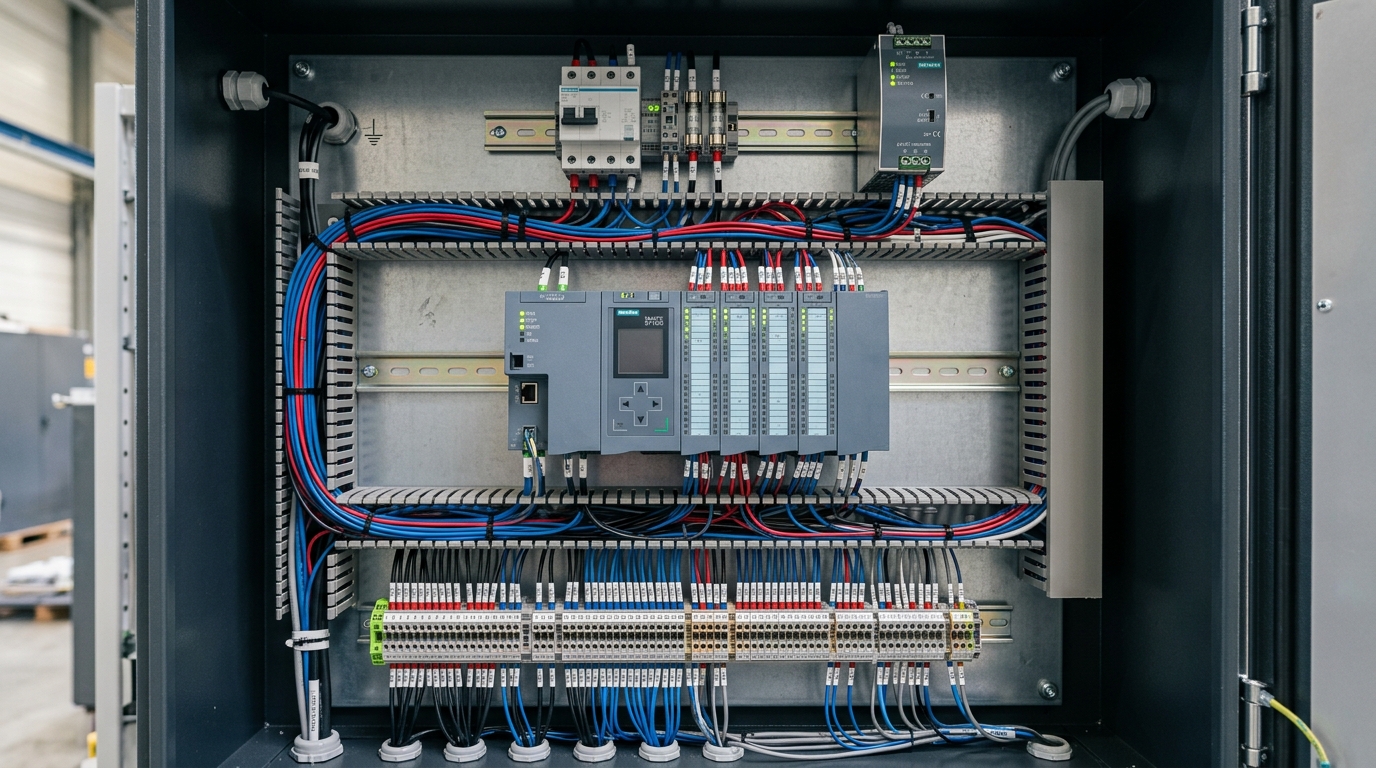
The physical installation of the new control panel must adhere to the highest standards of workmanship. Proper wire routing, clear labelling, and adequate thermal management are critical for ensuring the long-term reliability of the internal components. A poorly constructed panel, even if it contains the latest technology, will inevitably suffer from premature failures due to overheating, electrical interference, or mechanical stress. Paying attention to these foundational details is just as important as selecting the correct programmable controller.
The testing phase is another critical component of a successful upgrade. Factory Acceptance Testing should be conducted to verify that the software logic and hardware configuration meet all specified requirements before the panel is shipped to the site. Following installation, Site Acceptance Testing confirms that the system integrates correctly with the existing machinery and performs as expected under real-world operating conditions. Rigorous testing minimises the risk of unforeseen issues during startup and ensures a predictable transition to the new control system.
Ongoing support and maintenance are also essential considerations. Even the most advanced systems require periodic inspections and software updates to maintain optimal performance. Establishing a comprehensive service agreement with your automation partner ensures that you have access to expert assistance whenever required. This proactive approach to maintenance helps to prevent minor issues from escalating into major problems and maximises the return on your investment in modern automation technology.
Another significant consideration is the energy efficiency of modern hardware. Older controllers and their associated power supplies often draw more current and generate more heat than current models. By modernising the control panel, facilities can achieve measurable reductions in energy consumption. This not only lowers operational costs but also contributes to broader corporate sustainability goals. The efficiency gains extend beyond the control panel itself, as modern systems provide the data necessary to optimise the energy usage of the heavy machinery they govern.
The impact of a modern system on operator morale and productivity should not be underestimated. Providing staff with intuitive interfaces, clear diagnostic information, and highly reliable equipment reduces frustration and allows them to focus on optimising the process rather than constantly firefighting mechanical issues. A stable and predictable operating environment fosters a culture of continuous improvement, where operators are encouraged to identify inefficiencies and suggest operational enhancements based on the accurate data provided by the new control system.
The scalability of modern architectures ensures that your investment is protected against future changes in production requirements. As your facility expands or introduces new product lines, modern controllers can easily accommodate additional input and output modules, integrate with new communication networks, and support more complex programming logic. This inherent flexibility is a stark contrast to the rigid limitations of legacy systems, providing a solid platform that can evolve alongside your business objectives for many years to come.
Additional Considerations for Phased Upgrades
In certain situations, a complete and immediate replacement of the entire control system is not feasible due to budget constraints or operational requirements. Under these circumstances, a phased upgrade strategy can provide a practical alternative. This approach involves replacing the most critical or failure-prone components first, while temporarily retaining the less critical legacy equipment. While a phased approach requires careful engineering to ensure compatibility between the old and new hardware, it allows facilities to spread the capital expenditure over multiple financial years.
When executing a phased upgrade, the central processing unit is typically the first component to be replaced. Modern processors often feature backwards compatibility modules that allow them to communicate with legacy input and output racks. This strategy provides an immediate improvement in processing speed and diagnostic capabilities while delaying the cost of replacing the remote field wiring. As subsequent phases of the project are funded, the older input and output modules can be systematically upgraded to modern equivalents.
A phased approach does introduce additional complexity to the system architecture. Engineering teams must carefully manage the interfaces between the new and old hardware, ensuring that data is transmitted accurately and securely across the network boundaries. Comprehensive documentation becomes even more critical during a phased upgrade, as maintenance personnel need a clear understanding of which components have been replaced and which remain on the legacy platform.
Despite the added complexity, a phased upgrade can be a highly effective strategy for managing risk and controlling costs. By prioritising the replacement of the most vulnerable components, facilities can significantly reduce the likelihood of a catastrophic failure while steadily migrating towards a fully modernised control infrastructure. This methodical approach requires a deep understanding of the existing system and a carefully constructed roadmap that aligns with the long-term operational goals of the facility.
Securing the Future of Your Industrial Operations
Upgrading a legacy PLC system is a strategic investment in the long-term viability and efficiency of your manufacturing operations. The risks associated with obsolete hardware, including unplanned downtime, escalating maintenance costs, and cybersecurity vulnerabilities, far outweigh the temporary inconvenience of a planned modernisation project. By proactively replacing outdated controllers, facilities can improve reliability, enhance data visibility, and provide a secure foundation for future technological advancements.
The decision to upgrade requires careful consideration of the available hardware platforms, modern control panel design principles, and the integration of advanced technologies like SCADA, HMI, and secure remote access. Partnering with a qualified engineering firm that understands the intricacies of industrial automation and adheres to rigorous quality standards is essential for a successful transition. Evaluating your current infrastructure today will prevent costly disruptions tomorrow and ensure that your facility remains competitive in an increasingly automated industrial environment.